

Why Forcing Summer Reading Fluency Can Backfire and the Simple Shortcut to Faster Visual Decoding
Stop turning early phonics into a nightly household battle and discover how training your child’s brain to spot patterns in nature creates effortless literacy.

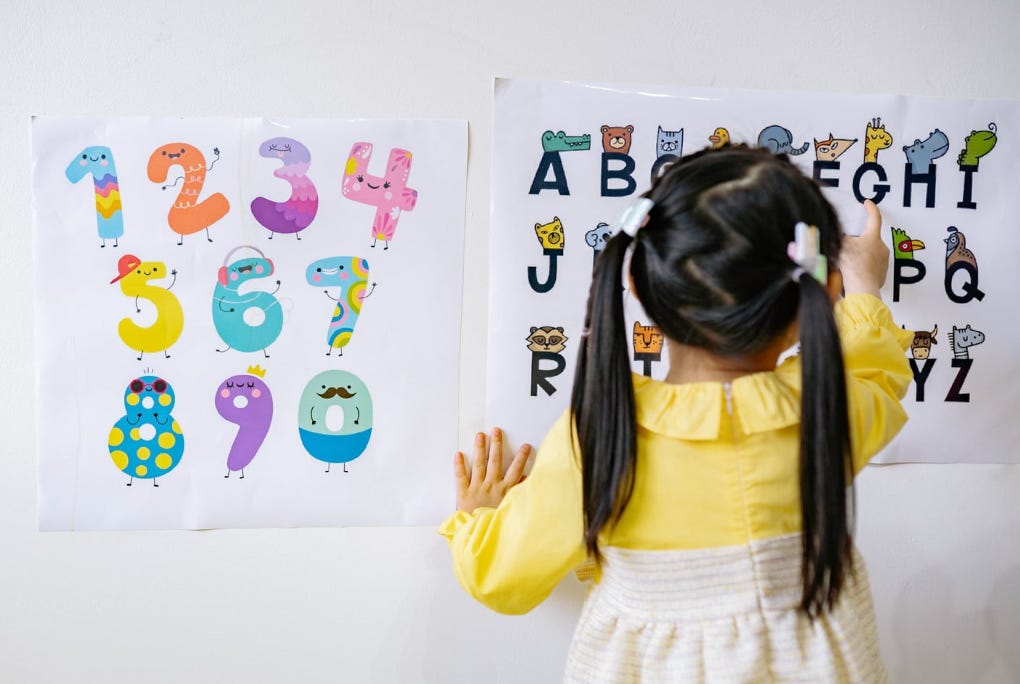
You can always tell when a child has hit the invisible wall of summer reading fatigue by the exact way their pencil drops.
It is a heavy, defeated sound against a kitchen table, usually followed by a slumped pair of shoulders, a slow turning away from the page, and the inevitable, quiet sigh of frustration. If you have a child between the ages of five and eight, the end of the school year rarely brings total relief. Instead, it arrives with a hidden layer of parental dread.
For so many well-meaning parents, this sets off an exhausting seasonal ritual. We stack the coffee table with leveled readers, open the phonics workbooks, and sit down every evening for what we promise ourselves will be a calm, patient tutoring session.
But it rarely stays calm. We point to individual letters, watch our children strain to sound out basic syllables, and feel a cold knot of anxiety tighten in our chests when they hit the exact same word they mastered just yesterday. We push through the mounting tension—and the occasional tears—because we carry a quiet, heavy guilt.
We tell ourselves that fluency is built through raw, unvarnished repetition, and that if we just drill the symbols enough times, the code will finally crack.
We believe we are doing the right thing. But by turning early literacy into a nightly household battleground, we are accidentally fighting against the natural mechanics of a young child’s brain.
Reading fluency doesn’t happen by forcing a child to stare at isolated static lines on a white page until their stamina breaks.
It happens through a foundational cognitive muscle called pattern recognition. Long before a child can decode a written sentence, their mind must learn how to decode the visual architecture of reality.
If you want your child to read with absolute ease this fall, you need to step off the workbook treadmill. The fastest way to help a young brain master text isn’t to force them to look at words. It is to take them outside and teach them how to look at trees.
The Secret Language of the Forest
When my kids were small, we spent the vast majority of our unstructured summer days taking long, aimless walks through the woods.
Having grown up in the desert, I was entirely used to vast, open spaces of sand, rock, and unbroken horizons. When I first moved to a forested region, the woods didn’t look beautiful to me—they just looked like a chaotic, overwhelming wall of green. I didn’t see the individual details; I just saw a mass of tangled branches and trunks.
But my children didn’t see a wall.
They were low to the ground, entirely unhurried, and naturally tuned to notice the microscopic details of their environment.
On one of our usual morning walks, it was my kids who first pointed out that the thick, velvet-green moss didn’t just grow randomly on any surface it could find. It grew consistently, predictably, on the north side of the tree trunks.
Standing there under the canopy, a switch flipped in my own mind. When I stepped back and faced south, the entire forest shifted. Across the whole expanse of the woods, a recognizable pattern emerged. The green moss wasn’t a series of isolated occurrences; it was a predictable, unified design.
Once your eyes learn to track that first pattern, you start seeing the secret language of nature everywhere.
You notice the perfect radial symmetry extending outward from the center of a dew-covered spider web, mimicking the spokes of a bicycle wheel. You see the spiraling geometry of a pinecone, the uniform layout of tiny seeds on the surface of a wild strawberry, and the alternating ladder patterns of veins running through a fallen leaf.
I never sat my kids down on a log and announced, “Pay attention to these shapes because pattern recognition will train your brain for school.” We didn’t have to. They were naturally driven to investigate because the information was real, physical, and right in front of them to touch.
They began classifying and testing hypotheses entirely on their own terms.
Which fruits have pits? Which leaves match perfectly like a mirror, and which ones alternate? They were participating in high-level scientific reasoning without ever realizing they were being taught.
The Mechanics of the Light Bulb Moment
To understand why these outdoor observations dissolve the frustration at the kitchen table, you have to look at what actually happens inside a young child’s brain when they try to read.
When an early learner first encounters a word like CAT, it is an exhausting, manual chore. Their eyes focus on the letter C, their brain retrieves the corresponding sound, and they repeat that exact process for A and T. Then, they have to expend an immense amount of working memory to blend those three distinct sounds back together into a meaningful word. If every single word requires that level of cognitive heavy lifting, reading feels like manual labor.
The breakthrough—the literal light bulb moment—happens when the child stops seeing three individual, isolated letters and begins to see a single, recognizable package.
They recognize the three-letter pattern of C-A-T as a whole visual shape. Once that pattern is locked into their long-term memory, they never unsee it. They no longer waste precious mental energy decoding the individual parts; they instantly grasp the whole package.
This is exactly how math sense works, too. A child struggles with the concept of ten as long as they have to visualize ten separate, isolated dots. The moment they can instantly recognize a cluster of objects as a “set of ten” without counting them one by one, their reasoning leaps forward.
Pattern recognition is the ultimate mental shortcut. It allows the brain to zoom out, see the deep relationships between individual pieces of data, and group them into manageable sets.
If you look at the cognitive research on how early learning actually works, it all points back to a single truth: pattern recognition skills are entirely transferable.
When you train a young child’s mind to spot, group, and predict patterns in a low-stakes environment like a backyard, you are building the exact neural architecture they need to chunk, decode, and master text lines later on.
Moving from Isolation to Connection
The central flaw of the modern summer workbook is that it teaches facts in total isolation. It treats reading like a mechanical trick and math like a memorization drill. But when a child is forced to learn facts in a vacuum, the knowledge doesn’t stick. Worse, it conditions them to believe that learning is a high-stress chore designed to please adults.
When you shift the focus to pattern decoding, you are teaching your child how to learn. You are turning them into active observers of reality.
Once a child’s mind is tuned to look for patterns, they naturally apply that skill to every subject they encounter:
In Language: They begin to hear the rhythmic patterns in rhyming stories, recognizing the predictable structure of spoken language long before they master grammar rules.
In Math: They play with simple geometric shapes or look at the spiral of a nautilus shell, building a visual memory that will make sense of fractions, symmetry, and sequencing years later.
In Science: They track the large-scale patterns of the seasons, the sun, and the life cycles of plants, learning to make intuitive analogies between growth, decay, and transformation.
By the time these children encounter advanced concepts in school, they aren’t intimidated by the complexity.
They recognize that a historical timeline follows a pattern of cause and effect, and that a story arc follows a predictable pattern of human behavior. They don’t see separate, overwhelming subjects—they see an interconnected web of systems.
The Low-Stakes Summer Action Plan
Reclaiming your child’s summer break from academic anxiety doesn’t mean you are letting their brains drift aimlessly for three months. It means you are replacing artificial, high-friction tasks with real-world discovery.
This week, put away the phonics flashcards and the timed reading logs. Give yourself and your kid permission to breathe. Instead, take them outside and introduce simple, low-stakes pattern games that require zero adult preparation:
The Geometric Hunt: Take an urban or nature walk and challenge your child to find basic shapes hidden in unexpected places. Look for the triangular wedges inside a sliced orange, the parallel lines of city sidewalks, the cones of evergreen trees, or the hexagonal geometry of a honeycomb.
The Symmetrical Match: Collect fallen leaves, flowers, or feathers. Help your child examine them to see if the two sides match perfectly like a mirror (bilateral symmetry), or if they alternate like a ladder along the stem.
The “I Spy” Matrix: Play pattern-based observation games while driving or walking. Challenge them to spot patterns in the intervals of traffic lights, the rhythm of pop songs on the radio, or the recurring architectural details on neighborhood houses.
When you offer your child the freedom to explore at this level, you are giving them the best possible preparation for the upcoming school year. You are allowing them to build an unshakeable foundation of confidence, curiosity, and critical thinking. When the fall arrives, they won’t be intimidated by the pages in front of them—because their minds will already know how to decode the world.